





Digital Twin Technology Accelerates the Intelligent Upgrade of Mobile Crushing Plants in Latin America
The mining and aggregates industry in Latin America is at a pivotal moment, driven by the dual pressures of maximizing operational efficiency and meeting stringent environmental and safety standards. In this challenging landscape, the mobile stone crusher plant(trituradora movil de piedra) has established itself as an essential asset for its flexibility and on-site processing capabilities. However, the next evolutionary leap—from mechanized mobility to true intelligence—is being powered by a transformative digital tool: the Digital Twin. This technology, which creates a dynamic virtual replica of a physical system, is rapidly accelerating the intelligent upgrade of crushing operations across the continent, moving decision-making from reactive to predictive and prescriptive.
A Digital Twin for a crushing operation is far more than a simple 3D model or a static dataset. It is a living, breathing virtual counterpart that ingests real-time data from sensors embedded in every component of the stone crusher plant—from feeder motors and crusher hydraulics to conveyor belt scales and final product screens. This continuous data flow allows the twin to simulate, analyze, and predict the behavior of the physical asset. For managers overseeing operations in remote Andean quarries or vast Brazilian mining concessions, this means unprecedented visibility and control, turning the complex, variable process of rock crushing into a finely tuned, data-driven science.

Contents |
[edit] From Reactive Maintenance to Predictive Optimization
The most immediate impact of Digital Twin technology is its revolutionary approach to equipment health and performance.
[edit] Real-Time Performance Monitoring and Anomaly Detection
Sensors on a granite crusher, for example, feed data on vibration, pressure, temperature, and power draw into its Digital Twin. The twin’s algorithms establish a baseline "healthy" operational profile. Any deviation from this profile—an unusual vibration pattern, a gradual increase in hydraulic pressure—is flagged immediately. This allows operators to identify a failing bearing, a slowly clogging filter, or wear on manganese liners long before a catastrophic failure occurs, shifting maintenance from a costly, unplanned emergency to a scheduled, efficient activity.
[edit] Simulation-Driven Process Optimization
The true power of a Digital Twin lies in its ability to run "what-if" scenarios without risking the physical equipment. An operations manager can use the twin to simulate the outcome of changing a key variable. What is the optimal feeder speed for a newly exposed vein of harder rock? How will increasing the closed-side setting (CSS) on the cone crusher affect overall throughput and product gradation? By testing these scenarios in the virtual environment, the ideal settings for maximizing yield and minimizing energy consumption can be determined and then applied to the physical mobile stone crusher plant with confidence.
[edit] Enhancing Operational Planning and Training
The applications of Digital Twins extend beyond the day-to-day, providing strategic advantages in planning and human resource development.
[edit] Virtual Commissioning and Layout Planning
Before a new stone crusher plant(planta de trituracion) is even transported to a challenging greenfield site, its Digital Twin can be deployed in a detailed virtual model of the terrain. Engineers can test different plant layouts, optimize feeder and discharge conveyor angles, and identify potential bottlenecks or safety hazards. This virtual commissioning process ensures that when the physical plant arrives, setup is faster, safer, and more efficient, minimizing costly on-site rework and downtime.
[edit] Immersive Operator Training and Safety Protocols
A Digital Twin serves as a perfect platform for immersive, risk-free training. New operators can learn to control the complex system within the virtual environment, practicing startup sequences, emergency shutdowns, and response to simulated equipment faults. This dramatically reduces the learning curve and ensures a higher standard of operational competency before anyone steps onto the actual site. Furthermore, safety procedures for lock-out/tag-out (LOTO) or liner changes on a granite crusher can be rehearsed virtually, enhancing safety culture and compliance.

[edit] Driving Strategic Business Outcomes
The integration of Digital Twin technology delivers tangible business benefits that justify the investment in digital infrastructure.
[edit] Maximizing Asset Utilization and Lifespan
By preventing unplanned breakdowns and optimizing performance, Digital Twins directly increase the overall equipment effectiveness (OEE) of the crushing fleet. The predictive insights allow for just-in-time parts ordering and precise maintenance scheduling, extending the operational lifespan of critical, high-cost components like crusher mantles and concaves. This maximizes the return on investment for every mobile stone crusher plant and granite crusher(trituradora de granito) in the fleet.
[edit] Data-Backed Decision Making for Fleet Management
For companies operating multiple mobile units across different sites, aggregated data from each plant's Digital Twin provides a dashboard for strategic fleet management. Leadership can compare performance metrics, energy consumption per ton, and maintenance costs across all assets. This data enables informed decisions on where to deploy specific plants, when to rotate equipment, and how to standardize best practices continent-wide.
[edit] Supporting Sustainability and ESG Goals
Digital Twins contribute significantly to environmental, social, and governance (ESG) reporting. By optimizing processes to reduce energy consumption per ton of aggregate produced, they lower the operation's carbon footprint. Accurate data on power usage, water consumption for dust suppression, and production yields provides verifiable metrics for sustainability reports, which are increasingly critical for securing financing and winning contracts from environmentally conscious clients.
In conclusion, Digital Twin technology is the catalytic force propelling the mobile stone crusher plant into a new era of intelligent industrial operation in Latin America. It transforms these robust machines from isolated units of production into connected, self-aware nodes in a smart mining ecosystem. By enabling predictive maintenance, virtual optimization, and enhanced training, Digital Twins are not merely an IT upgrade—they are a fundamental strategic tool for achieving superior efficiency, safety, and profitability. For forward-thinking aggregate producers, embracing this technology is the definitive step toward building the resilient, data-driven, and sustainable quarry of the future.
Featured articles and news
Costs and insolvencies mount for SMEs, despite growth

Construction sector under insolvency and wage bill pressure in part linked to National Insurance, says report.
The place for vitrified clay pipes in modern infrastructure
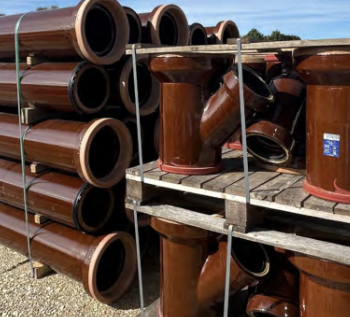
Why vitrified clay pipes are reclaiming their role in built projects.

Research by construction PR consultancy LMC published.
Roles and responsibilities of domestic clients

ACA Safety in Construction guide for domestic clients.
Fire door compliance in UK commercial buildings

Architect and manufacturer gives their low down.
Plumbing and heating for sustainability in new properties
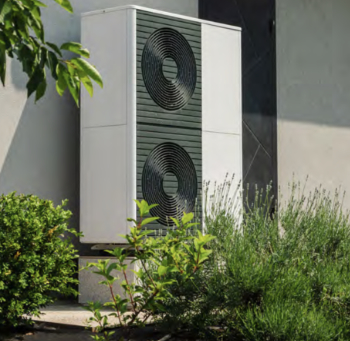
Technical Engineer runs through changes in regulations, innovations in materials, and product systems.
Awareness of the Carbon Border Adjustment Mechanism
What CBAM is and what to do about it.
The new towns and strategic environmental assessments
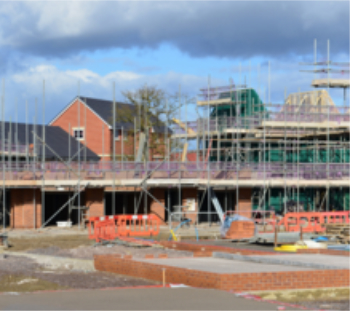
12 locations of the New Towns Taskforce reduced to 7 within the new towns draft programme and open consultation.

Buildings that changed the future of architecture. Book review.
The Sustainability Pathfinder© Handbook
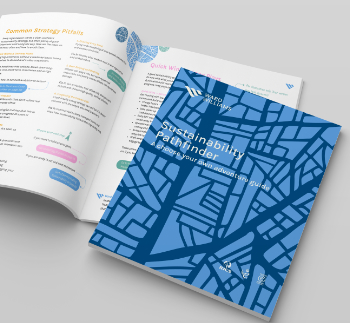
Built environment agency launches free Pathfinder© tool to help businesses progress sustainability strategies.

Government outcome to the late payment consultation, ECA reacts.
IHBC 2025 Gus Astley Student Award winners

Work on the role of hewing in UK historic conservation a win for Jack Parker of Oxford Brookes University.
Future Homes Building Standards and plug-in solar
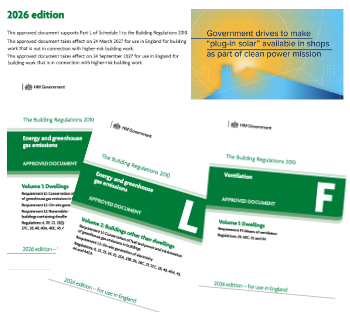
Parts F and L amendments, the availability of solar panels and industry responses.
How later living housing can help solve the housing crisis

Unlocking homes, unlocking lives.
Preparing safety case reports for HRBs under the BSA

A new practical guide to preparing structural inputs for safety cases and safety case reports published by IStructE.
Male construction workers and prostate cancer

CIOB and Prostate Cancer UK encourage awareness of prostate cancer risks, and what to do about it.